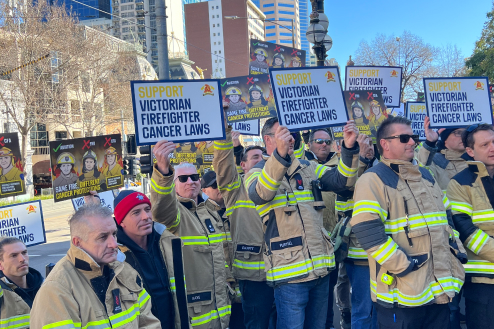
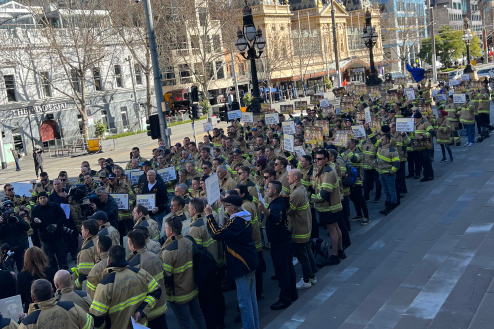
SUPPORT EXPANDING
VICTORIAN FIREFIGHTER CANCER LAWS
Every day, professional firefighters attending house, building and vehicle fires are exposed to toxic chemicals that enter their blood through their skin, meaning they’ll have a much higher risk of developing cancer.
A new bill has just been introduced to the Victorian Parliament to increase cancer protection for firefighters. This would mean that FRV firefighters received the same level of protection from cancer as firefighters working for the Commonwealth Government at Avalon Airport.
But despite strong support from the community and across the Victorian Parliament for improving cancer protection for firefighters, the Andrews Government has so far refused to increase cancer protection for firefighters in line with the Commonwealth.
We’re calling on the Andrews Government and the Victorian Parliament to protect the lives of the firefighters who protect us and support the bill to improve cancer protection for professional firefighters.
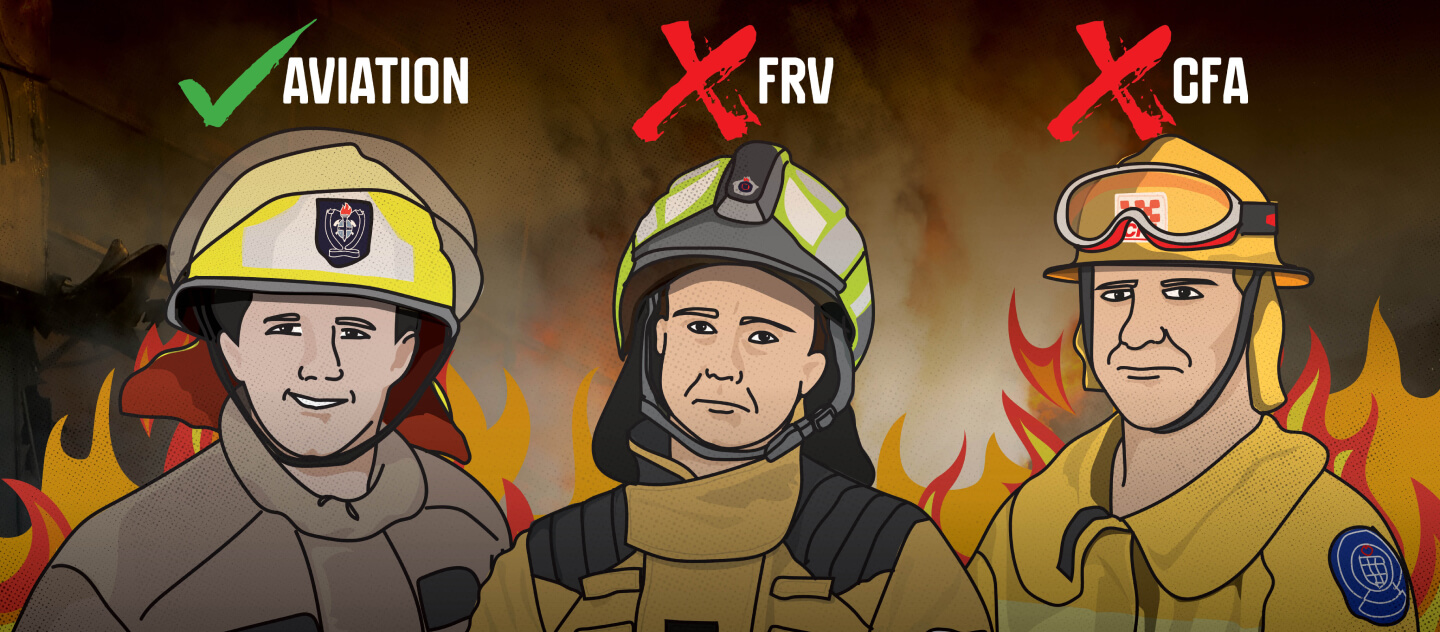
SAME FIRE, DIFFERENT CANCER PROTECTIONS
It’s not fair that Federal aviation firefighters would be covered for 20 cancers, but Victorian firefighters would only be covered for 15 cancers, for fighting the same fire? We’re asking the Andrews government to support the Green’s Bill to match the cancers covered under Commonwealth presumptive legislation.
Latest News
On Wednesday 2nd August, The Greens proposed a bill to include 8 additional cancers to cover Victorian firefighters under presumptive cancer laws. We’re urging the Andrews government to support this bill.
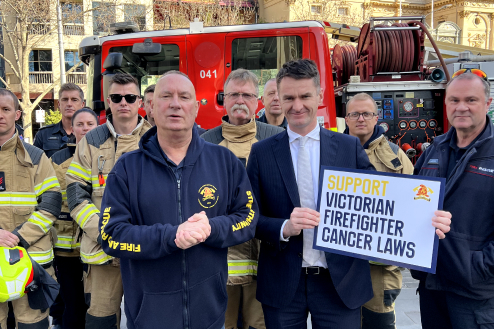
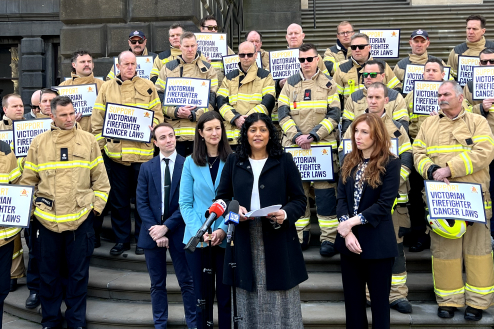
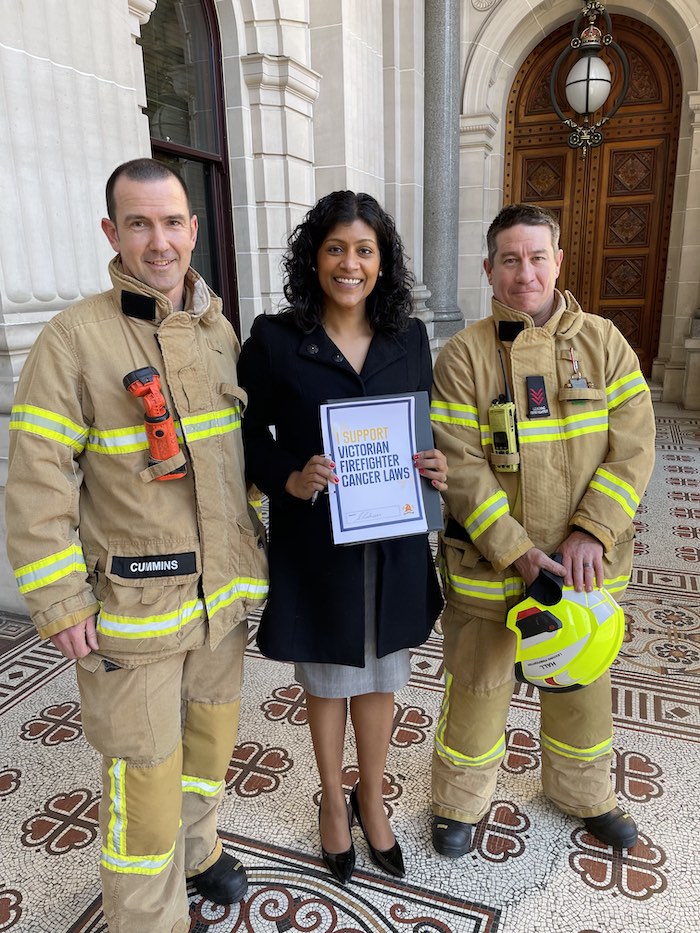
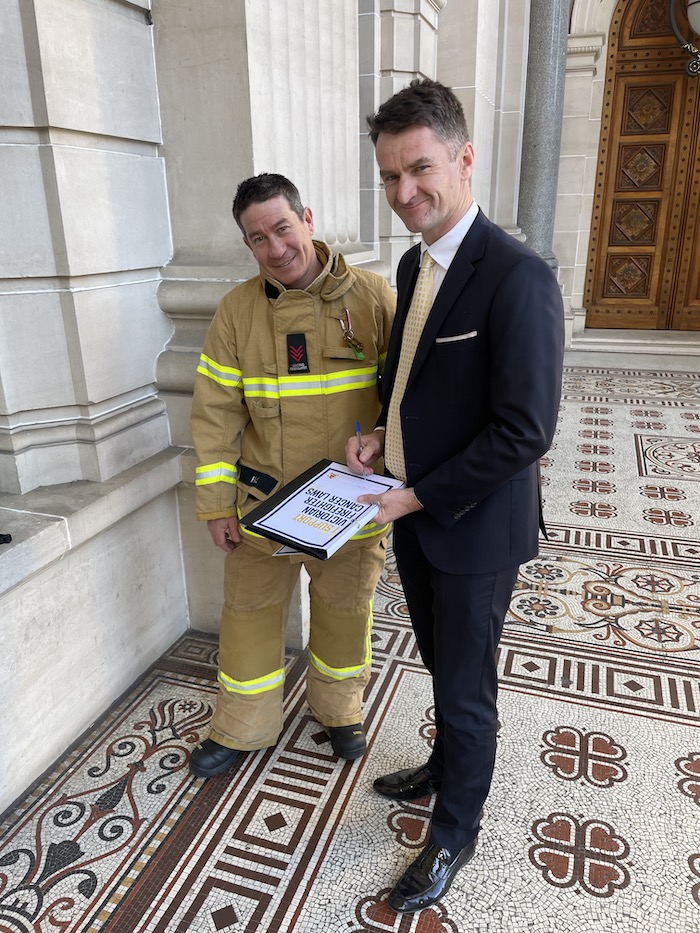
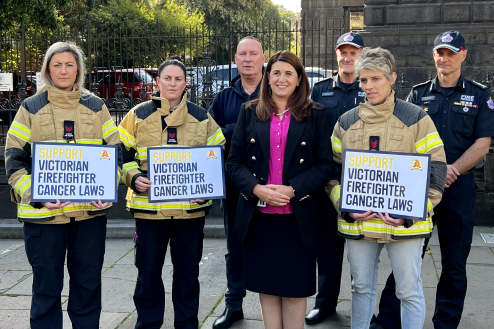
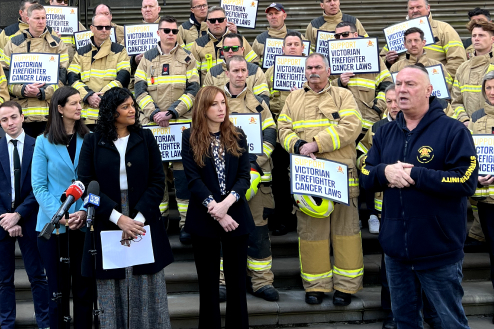
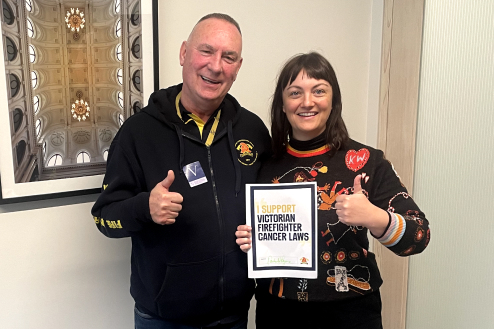
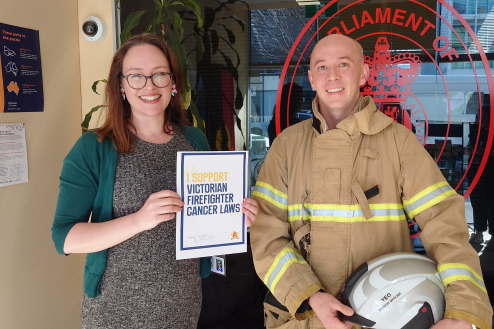
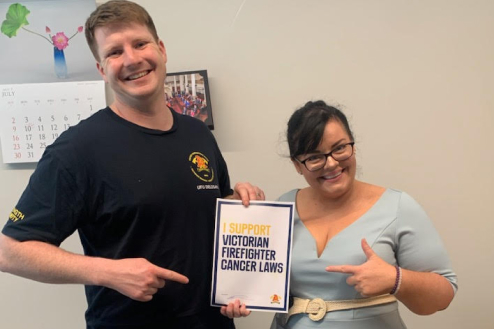
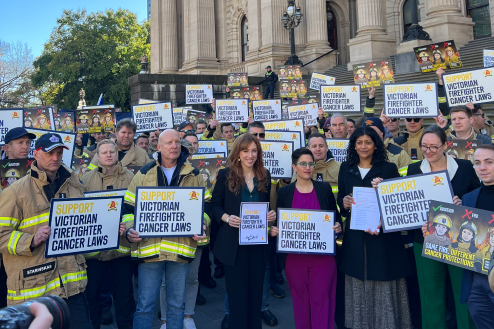
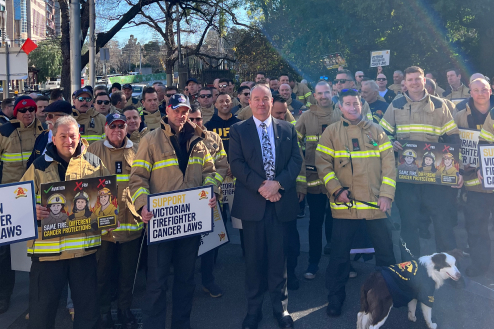
Firefighters wear Personal Protecting Clothing (PPC) inside structure (house) fires. This helps protect a Firefighter from heat and flame.
But PPC must breathe to release the metabolic heat build-up as a result of the Firefighter working within this high-temperature heat & flame environment. If the PPC did not breathe, the Firefighter’s major organs would overheat and the Firefighter would perish. The design of Firefighter uniform is an unavoidable compromise.
As a Firefighter is working hard to put out the fire, upwards of 10,000 toxins and chemicals leech into their skin and, consequently, their blood stream. This is known as dermal absorption. This is an unavoidable risk. It is a Firefighter’s reality.
In 2011, an Australian Senate Inquiry examined a Bill to introduce Presumptive Cancer Laws for Federal Firefighters. The Bill was the first of its kind in Australia. Following testimony around the country from Firefighters, Firefighter Widows and international Firefighter Cancer Law experts, the Senate Inquiry issued its Final Report, stating in part:
“The community holds a deep respect and gratitude for those who serve to protect and assist. If we are honest, however, along with this respect and gratitude comes a generous dose of expectation. We expect firefighters to come to our assistance when our homes, schools, hospitals and businesses are ablaze. We expect that a firefighter will enter a burning building when every human instinct tells us to leave. We expect they will search for those trapped inside and bring them out alive. We expect them to do what they can to minimise loss of life and damage to property. While everyone else is fleeing danger, it is the firefighter’s duty to tackle it head-on, to enter an extreme and dangerous environment, armed with the best protective gear available.
It is a duty firefighters take seriously, aware of the inherent risks to their own health and safety. This awareness on their part does not mitigate the community’s responsibility towards them.
The committee has carefully examined the large amount of evidence with which it has been presented. Study after study has pointed to a higher risk of cancer for firefighters than the general population. Science has confirmed what firefighters suspected for decades: that a disproportionate number of them in the prime of their lives are brought down with illnesses usually reserved for the old and the infirm.
…
The committee recognises that when a person spends their professional career inhaling and absorbing known—and probably some as yet unknown—carcinogens in the course of public service, it is the moral duty of the community to enable them to seek compensation should they fall ill as a consequence. For this reason the committee believes this Bill needs to be passed after being improved upon through incorporation of the committee’s amendments.”The Senate Inquiry recommended that the Cancer Law Bill be passed – and it was. The Bill was then replicated in each State around the country over the next 8 years.
There are dozens of national and international studies that provide that Career Firefighters contract specific cancers at a higher rate than the general population. For example:
- 2002 Tee Guidotti and David Goldsmith
“That it is reasonable given the available scientific evidence to adopt a policy of presumption for brain cancer, bladder cancer, kidney cancer, non-Hodgkin’s lymphoma (lymphatic cancer) and leukemia (hematopoietic cancer) for claims association with occupation as a firefighter.” - Bates (2001 NZ) demonstrated an increased risk of testicular cancer in career NZ firefighters even when previously identified testicular cancer cluster cases were excluded.
- Baris (Philadelphia 2001) study of career Philadephia firefighters reported statistically significant excess risks for colon, multiple myeloma and non-Hodgkins lymphomas.
- 2006 LeMasters et al A Meta-analysis of 32 studies of firefighters and cancer incidence and mortality that included approximately 110,000 full time career firefighters over the 32 studies from Australia, NZ, USA, Canada, Britain, France, Denmark which found increased cancer incidence for multiple myeloma, non-Hodgkin lymphoma, prostate, testicular, stomach, colon, rectum, skin, malignant melanoma, brain and leukemia.
- NIOSH (2013) was a mortality and cancer incidence study of a cohort of approximately 30,000 career firefiighters in San Francisco, Chicago and Philadelphia which demonstrated an excess cancer mortality rate and incidence for mesothelioma, respiratory, digestive and urinary system cancers.“Our results provide evidence of a relation between firefighting and cancer.”
- NIOSH (2015) examined the relationship between the level of exposures and the incidence of cancer among the 2013 cohort of approximately 30,000 career firefiighters in San Francisco, Chicago and Philadelphia in the above 2013 study. “Significant positive associations between fire-hours and lung cancer mortality and incidence were evident. A similar relation between leukaemia mortality and fire-runs was also found.”
- Monash Study (2014) was the largest single study of career and volunteer firefighters and found:
- The overall the cancer incidence for career firefighters was significantly raised compared to the Australian general population, and in particular for male career full time firefighters, a statistically significant increase in prostate cancer, significant increased risk of melanoma, significantly higher risk of kidney cancer, amongst other findings.
- The incidence of cancer is significantly raised for male career firefighters who work for 20 years or more.
Workers Compensation claims rely on causation and effect.
Take a Firefighter in a burning structure who breaks their arm as a result of a roof collapse. The causation is the roof collapse, the effect is a broken arm.
But what if a 40-year-old Firefighter with 16 years’ service is diagnosed with primary site brain cancer?
Traditional workers compensation systems rely on the worker proving causation. In the case of a Firefighter with a cancer – which one of the thousands of fires caused the cancer? And which one of the tens of thousands of combustible materials, carcinogens, toxins or chemicals caused the cancer?
Conventional workers compensation systems enable a disease to be “deemed”, which can assist in proving the causation (exposure) and effect (disease) for workers compensation. However, the “deemed disease” list does not assist professional firefighters.
Even with the “deemed diseases” list, a professional firefighter cannot pinpoint which one of the thousands of fires or tens of thousands of carcinogens and toxins they have been exposed to.
Firefighter cancer science demonstrates that cumulative exposure to structure (building) fires over time creates a higher chance of a professional firefighter contracting certain types of cancer.
With presumptive legislation, there is a legal presumption that a Firefighter who has worked a specified period of time and who has been diagnosed with a specified cancer (one of 12 types) has contracted that cancer as a result of their cumulative, workplace exposures (entering burning structures) over time.
Letters sent to members of parliament
Firefighters’ Presumptive Rights: The Firefighters’ reality, the unavoidable risk, and the testimony of Firefighters at the 2011 Senate Inquiry
Proposed amendment to Firefighters’ Presumptive Rights contradicts OH&S requirements and Fire Services’ safe systems of work